10 Best Indoor Grills
10 Best Indoor Grills

I’ve cooked with a lot of ceramic pans over the years. They promise a slick, non-toxic surface that lets an omelet slide right out. And when they’re new, they absolutely deliver. But I’ve also seen plenty of them lose that magic after a few months of use.
The difference between a great ceramic pan and a mediocre one comes down to heat distribution, the durability of the coating, and how you treat it. Some are built like tanks, while others are best for gentle, low-heat cooking. After frying dozens of eggs and searing countless chicken thighs, these are the best ceramic pans I’ve tested for 2026.
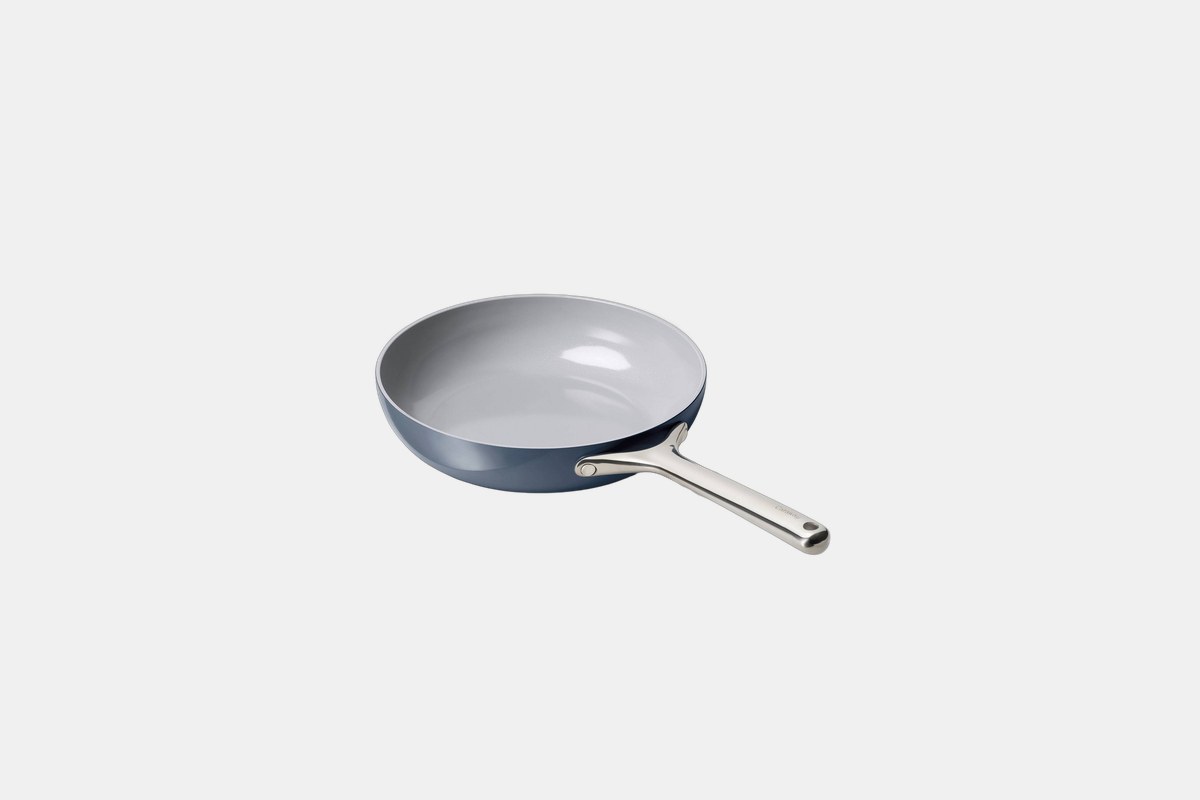
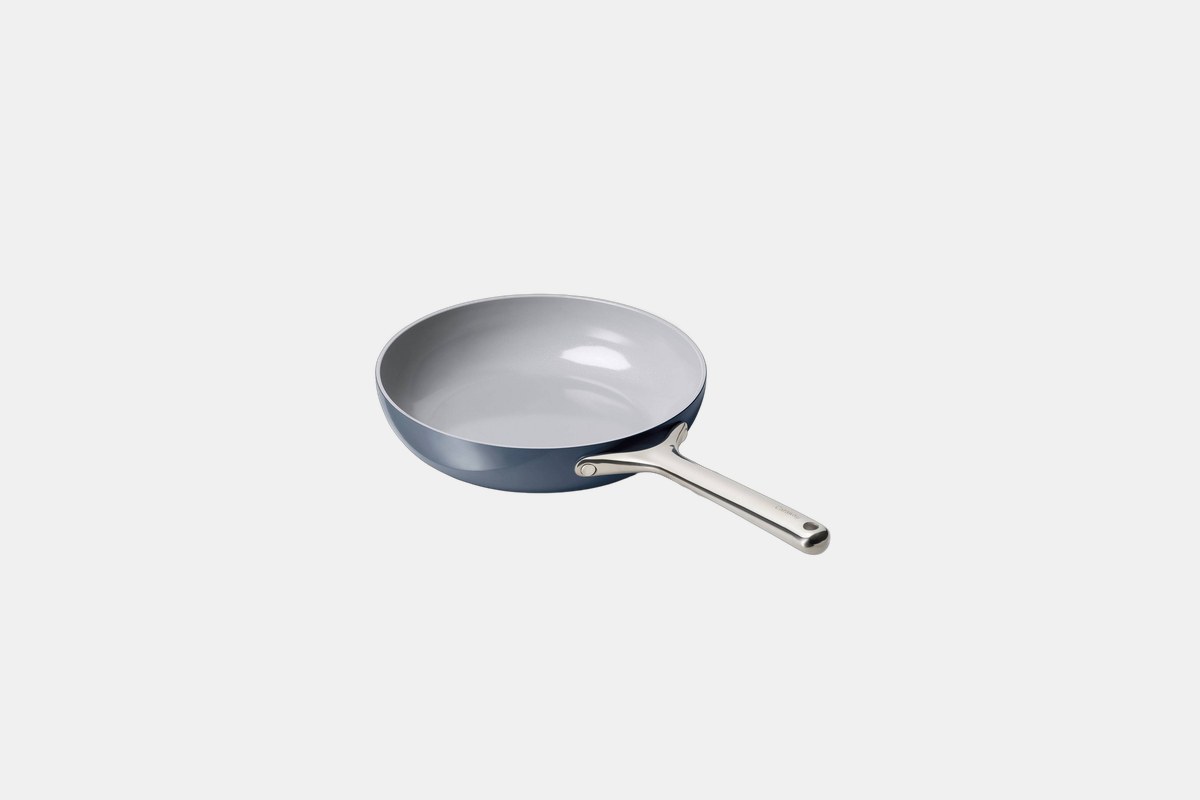
The Caraway 10.5″ Ceramic Fry Pan costs around $125. It’s probably the pan you’ve seen all over social media, and for good reason. It’s perfect for the home cook who wants a reliable, stylish, and completely PFAS-free pan for daily tasks.
This thing is an egg-frying machine. It heats up incredibly evenly on my gas stove and on induction, with no weird hot spots. The nonstick surface is so slick that cleanup is usually just a quick wipe with a paper towel. It’s also surprisingly lightweight and comfortable to hold.
The Downside: It’s strictly hand-wash only. Like most ceramic coatings, its lifespan really depends on you. You have to avoid high heat, metal utensils, and cooking sprays or you’ll kill the nonstick surface faster than you’d expect.
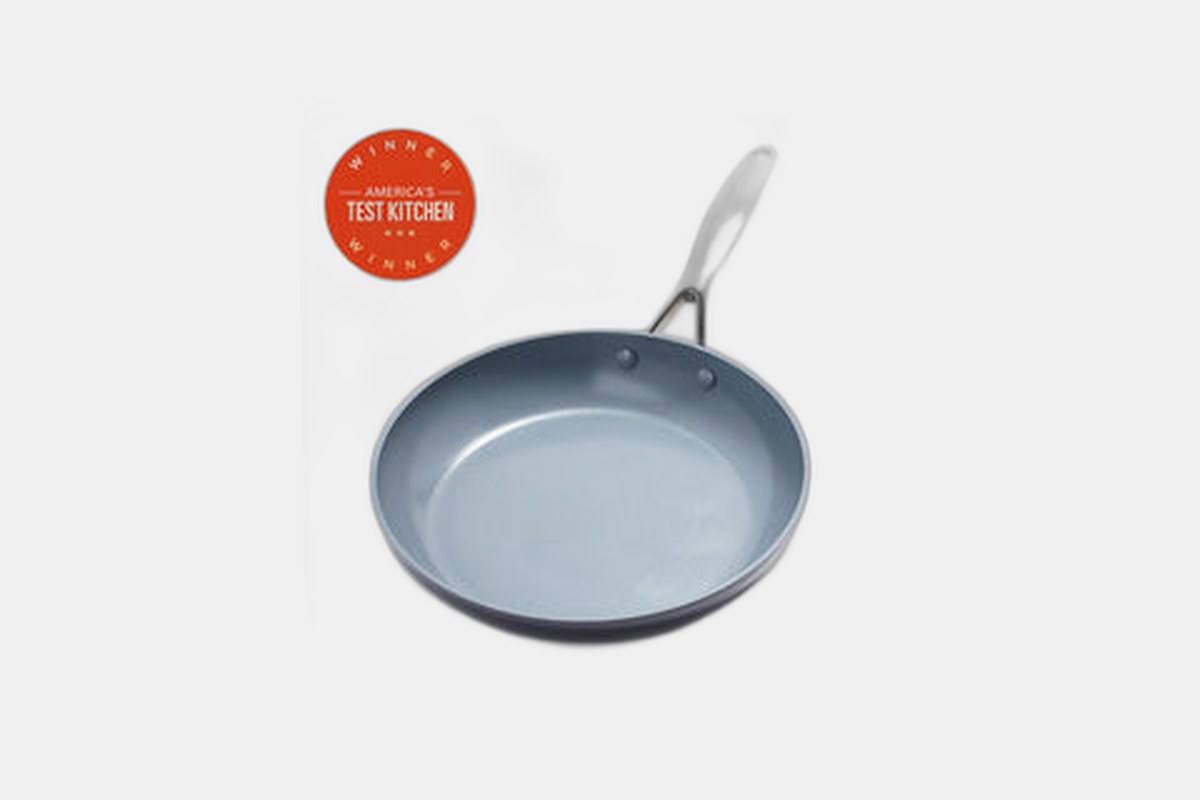
You can usually find the GreenPan Valencia Pro for about $89.99. If you’re looking for a ceramic pan that can actually take a bit of a beating, this is the one. It’s my go-to recommendation for people who are tough on their cookware.
Its Thermolon diamond-infused coating is genuinely more durable than most ceramic surfaces I’ve used. GreenPan says it’s metal-utensil safe, and while I still stick to silicone, it has held up remarkably well to daily use. The hard-anodized body heats fast and evenly, and it’s oven-safe to a blistering 600°F.
The Downside: It’s a bit heavier than pans like the Caraway, and it’s not cheap. Even with its tough coating, it’s still a nonstick pan—it won’t last forever like your cast iron skillet will.
The Our Place Always Pan 2.0 runs about $135. This pan is designed for people living in small apartments or who just hate clutter. It aims to replace your frying pan, sauté pan, steamer, and saucepan all in one colorful package.
I was skeptical, but it really is versatile. The included stainless steel steamer basket is perfect for veggies or dumplings, and the built-in spatula rest is a nice touch. The nonstick performance is solid for everything from frying to braising, and it works on all cooktops, including induction.
The Downside: It’s a jack-of-all-trades but a master of none. It isn’t deep enough to be a true wok or heavy enough to be a Dutch oven. And you really have to hand-wash it to protect that Thermakind ceramic coating.
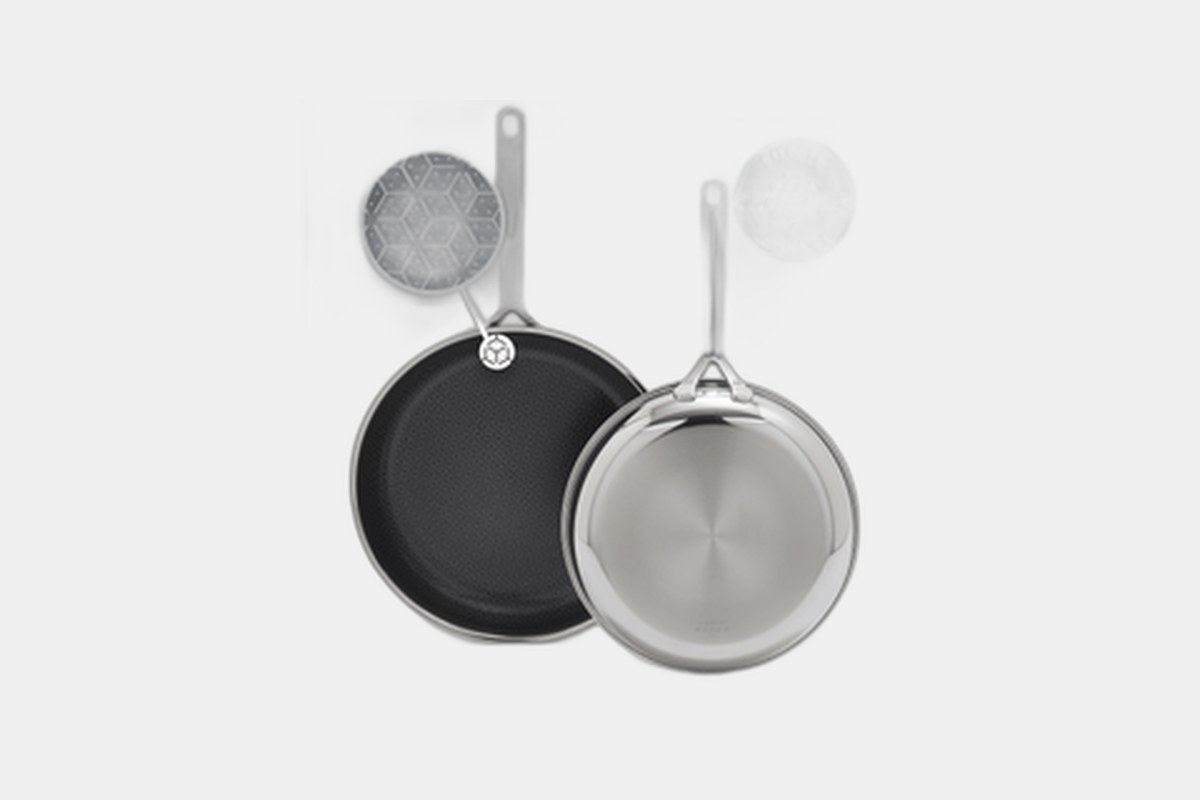
At around $79.99, the GreenPan Spectra offers something different. This is for the cook who loves the easy release of nonstick but misses the great sear you get from stainless steel. This hybrid pan tries to give you both.
The cooking surface combines a stainless steel grid with ceramic nonstick coating. This design gives you noticeably better browning on chicken and steaks than a standard flat ceramic pan. Food release is still excellent, and tests show its durability is top-notch.
The Downside: All that stainless steel makes it heavier than an all-aluminum pan. It’s also more expensive than a basic nonstick skillet, putting it in a more premium category.
The Oxo Ceramic Professional pan costs about $59.99, making it a fantastic value. If you want great performance without a huge price tag, this is a seriously good option. It delivers on the basics without any fuss.
In my tests, it cooked just as evenly as pans costing twice as much. The nonstick release is very good, and the hard-anodized body feels sturdy and well-made. Plus, the signature Oxo handle is super comfortable to grip.
The Downside: This is still a ceramic pan, so its long-term durability hinges on proper care. High heat and metal tools will degrade the surface over time, so you need to be gentle with it.
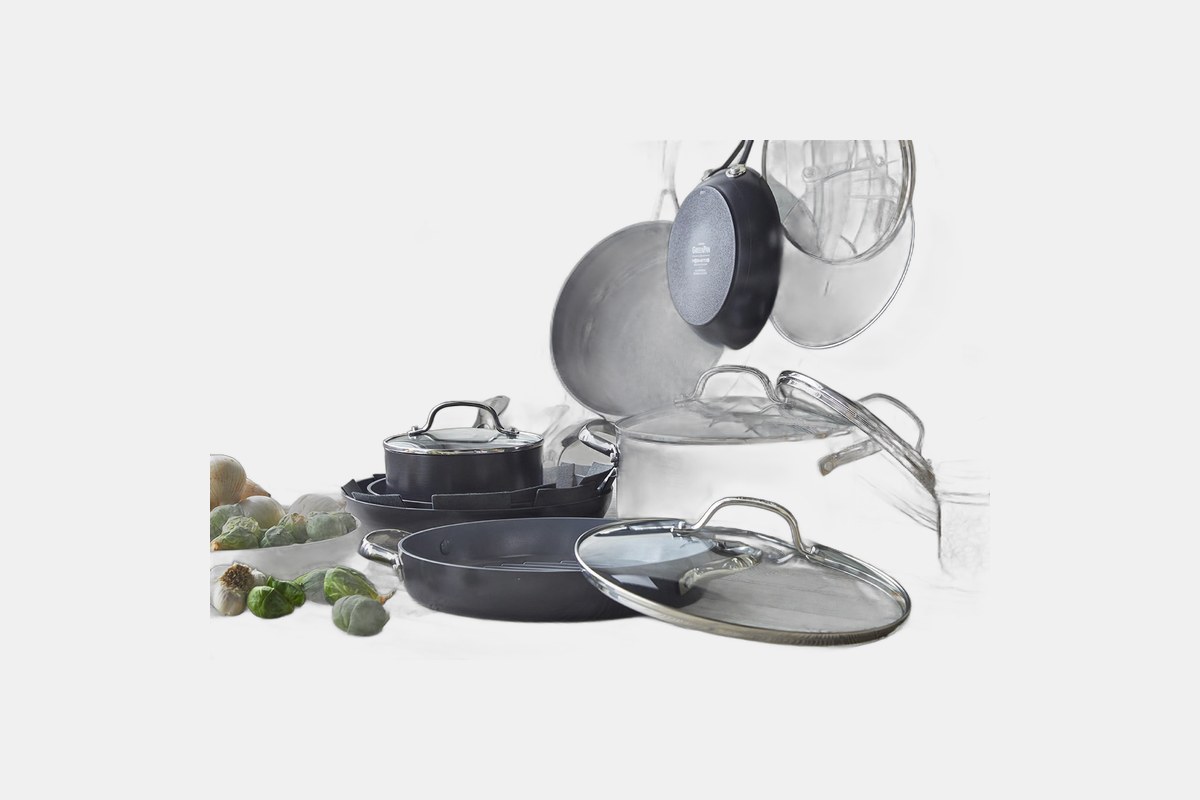
Priced at $129.99, the GreenPan GP5 is a premium pan for serious cooks. This is for someone who uses their nonstick skillet almost every single day and is willing to invest in toughness.
The Infinite8 coating is the real deal. It’s one of the most scratch-resistant ceramic surfaces I’ve come across, handling daily cooking with ease. The heat distribution is flawless, the nonstick performance is stellar, and it feels incredibly well-built from the base to the handle.
The Downside: It’s expensive for a single nonstick pan. It’s also on the heavier side, so if you like to flick your wrist to toss ingredients, you might find it a little cumbersome.
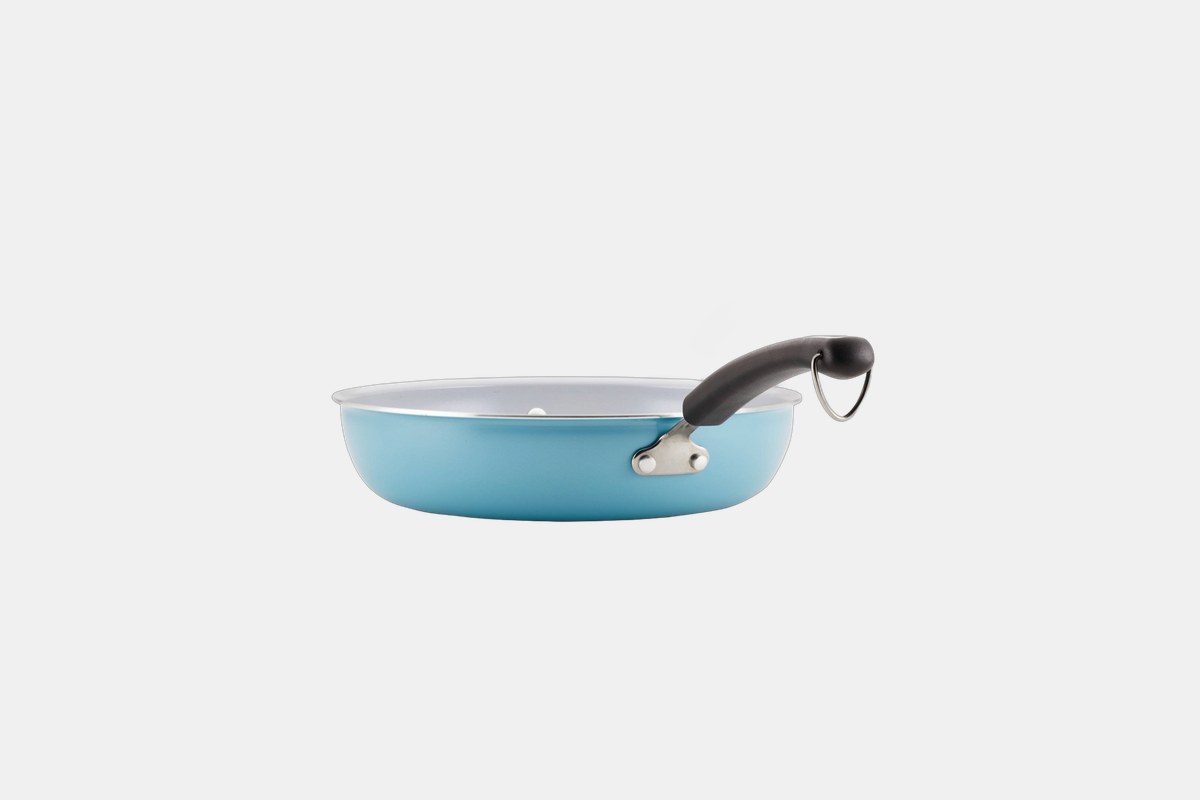
For just $39.99, the Farberware EcoAdvantage is an absolute bargain. This is the pan for a first apartment, a college dorm, or for someone who only needs a nonstick pan occasionally.
It’s very lightweight and easy to handle, and the ceramic nonstick surface works just fine for eggs, pancakes, and other simple meals. For the price, the performance is solid, offering a safe, PFAS-free option without a big investment.
The Downside: You get what you pay for. The overall build and coating are not designed for heavy, long-term use. Don’t expect this one to last for years if you’re cooking with it every day.
The best thing about ceramic cookware is its slick, non-toxic surface. It provides excellent nonstick performance without the use of PFAS, PFOA, or PTFE. But it’s a different material than traditional Teflon, and you have to treat it differently.
Heat is the enemy of ceramic coatings. High heat can cause the coating to break down and lose its nonstick properties quickly. I always recommend cooking on low to medium heat. Also, avoid aerosol cooking sprays—they can build up a residue that’s almost impossible to remove.
Finally, be gentle. Even on pans rated for metal utensils, I stick with wood or silicone. And always let the pan cool down completely before washing it by hand. A little care goes a long way in making your ceramic pan last.
10 Best Indoor Grills
10 Best Baby Food Makers
8 Best Waffle Makers
10 Best Coffee Makers